Phosphate Fertilizer Executive Summary
The global phosphate fertilizer market stands at an inflection point. Sustained population growth, accelerating food security programmes, and intensifying agricultural production across South Asia, Sub-Saharan Africa, and Latin America are driving diammonium phosphate (DAP) and monoammonium phosphate (MAP) demand to record levels. Industry consensus projections indicate global phosphate fertilizer demand will reach approximately 57.5 million metric tons (nutrient basis) by 2030, up from around 51 million metric tons in 2025.
Central to this growth narrative is sulphur, the critical upstream feedstock used to manufacture sulphuric acid, which is in turn essential for phosphoric acid and, ultimately, DAP/MAP production. The fertilizer sector currently absorbs approximately 55–60% of global sulphur consumption, making phosphate producers structurally dependent on the availability and cost of sulphur.
Global sulphur supply, overwhelmingly derived as a by-product of oil and gas refining and natural gas processing, is itself subject to the structural forces reshaping energy markets. While near-term supply growth from the Middle East, Kazakhstan, and Russia appears capable of supporting demand, the longer-term trajectory is less certain. The accelerating energy transition, characterised by refinery rationalisation, declining sour crude processing, and reduced fossil fuel throughputs, risks compressing sulphur recovery volumes toward the end of the decade and beyond.
This analysis examines the evolving sulphur-phosphate supply chain, identifies key regional dynamics, and assesses whether structural tightness could emerge as a defining variable for phosphate fertilizer competitiveness and pricing through 2030.
1. Introduction
Sulphur occupies a foundational position in the global fertilizer value chain that is frequently underestimated in market discourse. While phosphate rock, ammonia, and potash typically dominate industry headlines, the availability and affordability of elemental sulphur is, in practice, the upstream variable that most directly determines the operating economics of integrated phosphate fertilizer production complexes.The production of phosphoric acid the key intermediate in DAP and MAP manufacture relies on sulphuric acid as the primary leaching agent. Approximately 0.38 to 0.40 tonnes of sulphur are required to produce one tonne of phosphoric acid (P2O5 basis), and roughly 2.5 tonnes of sulphuric acid are consumed per tonne of P2O5 produced. For a large-scale phosphate producer manufacturing 1 million tonnes per annum of DAP, this translates into an annual sulphur requirement of approximately 600,000–650,000 tonnes underscoring the feedstock's strategic significance.
Unlike phosphate rock, ammonia, or potash, elemental sulphur is an involuntary by-product of hydrocarbon processing rather than a primary extractive commodity. This structural distinction creates a supply dynamic that is largely decoupled from direct market price signals. Sulphur is recovered during oil refining desulphurisation processes and natural gas sweetening operations to prevent atmospheric sulphur dioxide emissions in compliance with increasingly stringent environmental regulations. Producers have limited ability to accelerate or reduce sulphur output in response to market conditions.
For phosphate producers, buyers, and commodity market participants, monitoring sulphur fundamentals has therefore become an increasingly important discipline. As energy transition forces reshape the refinery landscape and demand for DAP and MAP climbs in high-growth agricultural economies, the supply-demand balance for sulphur will play a more prominent role in determining phosphate fertilizer production economics, pricing, and trade competitiveness through 2030.
Rising Global Phosphate Fertilizer Demand
The structural drivers underpinning global phosphate fertilizer demand are robust and multi-dimensional. Population growth remains the primary macro-level force: the global population is projected to reach approximately 8.5 billion by 2030 and exceed 9.7 billion by 2050 (UN DESA), placing sustained upward pressure on agricultural productivity requirements. Phosphate, as one of the three primary plant nutrients, is non-substitutable in food crop production, and its efficient application is central to achieving the yield improvements necessary to feed a growing world.
Beyond population dynamics, agricultural intensification trends in key emerging markets are driving accelerated fertilizer application rates. India, currently the world's second-largest DAP importer, is pursuing ambitious farm income and food security programmes that are expected to sustain high phosphate import volumes through the decade. Brazil, the world's largest agricultural exporter and a dominant consumer of DAP and MAP, continues to expand cultivated area across the Cerrado and MATOPIBA regions, supporting structural import demand growth. Southeast Asia particularly Indonesia, Vietnam, and the Philippines is intensifying rice, palm oil, and sugarcane cultivation, driving incremental phosphate requirements.
Sub-Saharan Africa represents the most significant long-term demand frontier. With average fertilizer application rates of approximately 17 kg per hectare compared to a global average of around 135 kg per hectare (FAO), the continent's phosphate consumption potential is substantial. Driven by the African Union's Malabo Declaration targets and government subsidy programmes in countries including Ethiopia, Nigeria, and Kenya, African phosphate demand is expected to grow at above-average rates through 2030.
Industry estimates, supported by data from the International Fertilizer Association (IFA) and FAO, project global phosphate fertilizer demand will grow at a compound annual growth rate (CAGR) of approximately 2.0–2.5% through 2030, reaching an estimated 57.5 million metric tons (nutrient basis) from around 51 million metric tons in 2025.
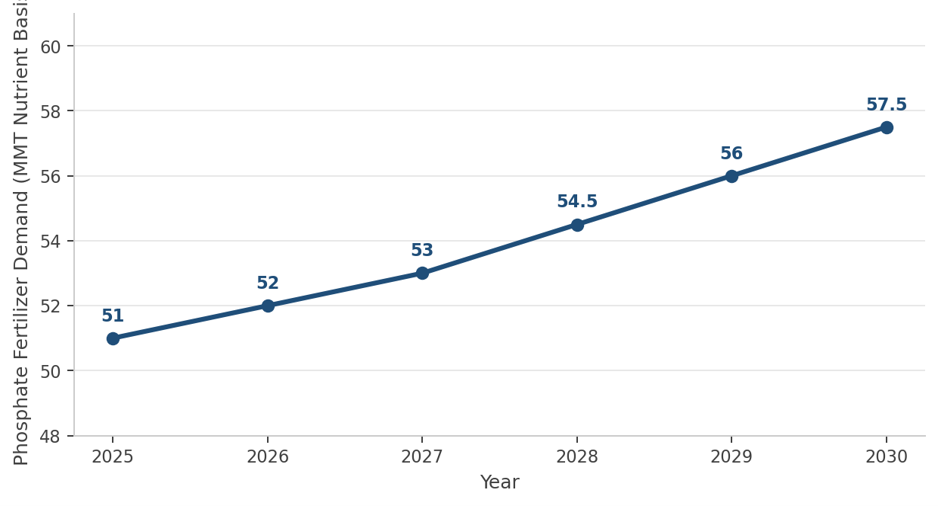
Figure 1: Global Phosphate Fertilizer Demand Outlook (2025–2030)
Source: IFA; FAO; Industry Demand Estimates
3. Sulphur: The Critical Feedstock Behind Phosphates
The relationship between sulphur and phosphate fertilizer production is both chemically fundamental and economically inseparable. The manufacturing process follows a well-defined sequence: elemental sulphur is combusted and catalytically converted to sulphur trioxide (SO3), which is then absorbed in water to produce sulphuric acid (H2SO4). This sulphuric acid is subsequently used to acidulate phosphate rock in a wet-process reaction, yielding phosphoric acid (H3PO4). Phosphoric acid is then reacted with ammonia in the final stage to produce either DAP or MAP.
This integrated process chain establishes a direct and proportional relationship between phosphoric acid output and sulphur input requirements. Industry standard ratios indicate that approximately 2.3–2.6 tonnes of sulphuric acid equivalent to approximately 0.75–0.84 tonnes of elemental sulphur are consumed per tonne of DAP produced. For MAP, the ratios are modestly lower given different nutrient concentrations.
The Phosphate Fertilizer Value Chain
The value chain below illustrates the sequential dependency from sulphur through to agricultural application. A disruption or cost escalation at any upstream stage propagates directly into fertilizer production economics.
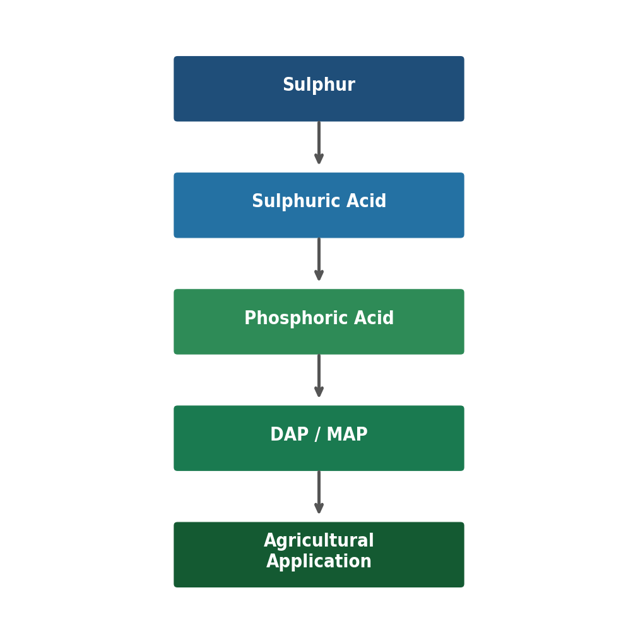
Figure 2: Phosphate Fertilizer Production Value Chain
Source: Industry Process Flows; The Sulphur Institute
As global phosphate producers led by Morocco's OCP Group, Saudi Arabia's Ma'aden, and China's mosaic of state-owned enterprises expand their output capacities, their aggregate sulphur procurement requirements rise commensurately. The ability to secure sulphur at competitive prices and in reliable volumes has, accordingly, become a critical operational and commercial capability for phosphate industry participants globally.
4. Rising Sulphur Requirements from the Fertilizer Sector
The fertilizer sector is, by a substantial margin, the largest single consumer of elemental sulphur globally, accounting for approximately 55–60% of total consumption in recent years. The remainder is consumed across a range of industrial applications including petroleum refining, chemicals manufacturing, mining (for copper, zinc, and lithium extraction), and the production of sulphur-based specialty products.
As phosphate fertilizer demand grows in line with the trajectory outlined in Section 2, sulphur consumption by the fertilizer sector is expected to expand correspondingly. IFA and CRU Group estimates indicate that fertilizer-related sulphur demand will increase from approximately 38 million metric tons in 2025 to around 45 million metric tons by 2030 an increase of approximately 18.4% over the five-year period.
This growth is not uniform across geographies. The most significant incremental demand is expected to originate from expansions in Moroccan and West African processing capacity, as the OCP Group accelerates its integrated phosphate expansion plans and new projects emerge in Senegal and Togo. In the Middle East, Ma'aden's ongoing capacity expansions in Saudi Arabia and planned developments in the UAE will further increase regional sulphur absorption. In China, despite slowing domestic fertilizer consumption growth, continued phosphoric acid production capacity additions will sustain elevated sulphur import requirements.
Industrial demand for sulphur notably from the growing lithium battery supply chain, where sulphuric acid is used in lithium mining and battery manufacturing processes represents an emerging additional consumption driver. Although still modest in absolute terms relative to the fertilizer sector, battery materials demand for sulphuric acid could add approximately 0.5–1.5 million tonnes of incremental sulphur equivalent demand by 2030, representing a structural new demand vector that could amplify price pressure during periods of supply tightness.
.png)
Figure 3: Global Sulphur Demand from Phosphate Fertilizer Production (2025–2030)
Source:; IFA; Industry Estimates
5. Can Refinery Sulphur Supply Keep Pace?
Global sulphur supply is almost entirely produced involuntarily as a by-product of hydrocarbon processing. Approximately 75–80% of global elemental sulphur production is recovered from crude oil refining desulphurisation units and natural gas sweetening operations. The remaining 15–20% is produced from natural gas processing, pyrite roasting, and metallurgical processes. This supply structure has a fundamental implication: sulphur production is largely inelastic and driven by hydrocarbon throughput volumes rather than sulphur market price signals.
Near-term sulphur supply growth is expected to be supported by ongoing refinery expansions and grassroots capacity additions in the Middle East, where Saudi Aramco, ADNOC, and QatarEnergy continue to invest in large-scale downstream processing. Kazakhstan's Kashagan and Tengiz oilfields, which process exceptionally high-sulphur sour crude and gas, remain prolific sulphur producers, and ongoing upstream field expansions support incremental recovery volumes. Russian natural gas processing, centred on the Orenburg and Astrakhan gas treatment facilities, contributes additional output, though geopolitical risk has elevated uncertainty around export availability.
Global sulphur supply is projected to grow modestly from approximately 72 million metric tons in 2025 to around 77 million metric tons by 2030, driven primarily by Middle Eastern and Central Asian production growth. However, the supply growth trajectory is decelerating relative to prior decades, and the medium-term outlook is clouded by energy transition dynamics (discussed further in Section 7).
The critical risk to monitor is the quality of crude slates being processed globally. High-sulphur sour crudes, which generate proportionately greater sulphur recovery volumes, are gradually being displaced by lighter, sweeter crudes in some refining centres. As refinery configurations adapt to changing crude availability and as demand for transportation fuels softens in major OECD markets, sulphur recovery intensity per barrel of crude processed could diminish, potentially placing a lower ceiling on future supply growth than headline refinery capacity figures might suggest.
.png)
Figure 4: Global Sulphur Supply Outlook (2025–2030)
Source: IEA; Industry Refinery Outlooks; Company Reports
6. Key Regions Driving the Sulphur Market
Major Exporters
The Middle East dominates global sulphur trade as both the primary producing and exporting region. Saudi Arabia, through the operations of Saudi Aramco the world's largest crude oil producer and a significant natural gas processor is the single largest sulphur exporter globally, with export volumes from the Yanbu, Jubail, and Ras Tanura complexes running into the tens of millions of tonnes annually. The UAE (ADNOC's Das Island operations) and Qatar (QatarEnergy's Ras Laffan complex) contribute additional multi-million-tonne export streams. The Ruwais (UAE) and Ras Laffan (Qatar) facilities are equipped with large-scale granulation plants that produce prilled and granular sulphur suitable for direct export to fertilizer producers.
Kazakhstan is the most significant non-Middle Eastern sulphur exporter, with the Tengizchevroil and Kashagan consortiums collectively producing and exporting large volumes of sulphur recovered from exceptionally sour crude processing. Russian exports, while subject to elevated geopolitical and sanctions risk, remain a significant supply source for Asian markets, particularly from the Astrakhan and Orenburg processing complexes.
Major Importers
Morocco's OCP Group is the world's largest single sulphur importer, absorbing volumes to support its world-scale phosphoric acid and DAP/MAP operations at Jorf Lasfar and Safi. India through public sector fertilizer companies including IFFCO, Coromandel International, and Deepak Fertilisers is a perennial top-five sulphur importer, primarily sourcing from the Middle East via competitive tender. China, despite hosting significant domestic sulphur production from its own refinery network, imports incremental volumes during periods of domestic tightness. Brazil imports sulphur to support phosphate production at the Cajati and Tapira complexes, with volumes increasingly sourced from Middle Eastern term contracts.
The geographic concentration of supply with the Middle East accounting for approximately 35–40% of global seaborne sulphur exports creates structural freight and supply security risks for import-dependent producers. Geopolitical disruption, port congestion, or seasonal shipping constraints can generate disproportionate spot price volatility, as observed during several recent market dislocations.
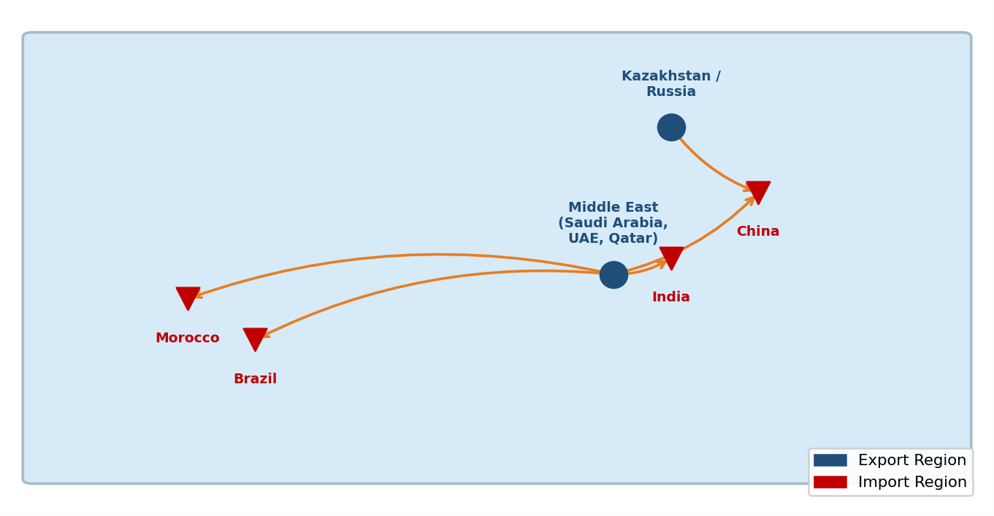
Figure 5: Global Sulphur Trade Flow Map
Source: Trade Data; Customs Statistics; Industry Estimates
7. Energy Transition: Opportunity or Risk for Sulphur Supply?
The structural transformation of global energy systems represents perhaps the most significant long-term uncertainty confronting the sulphur supply outlook. The International Energy Agency's net-zero emissions scenarios project a substantial and accelerating decline in global oil and gas production post-2030, which, if realised, would progressively reduce the hydrocarbon throughput volumes that generate the majority of the world's sulphur supply.
In the near term, the energy transition may actually support sulphur supply. Tightening environmental regulations including expanded IMO maritime fuel sulphur limits, Euro 7 vehicular emissions standards, and air quality legislation in major emerging economies are compelling refineries to invest in deeper desulphurisation units, which may temporarily increase sulphur recovery intensity per barrel processed. Additionally, the continued shift toward ultra-low sulphur diesel and marine gasoil standards is driving refinery configuration upgrades that extract a higher proportion of sulphur from crude inputs.
However, the medium- to long-term trajectory poses more significant challenges. The gradual phase-out of internal combustion engine vehicles in key markets, the displacement of petroleum-based transportation fuels, and the structural rationalisation of refinery capacity in OECD markets could collectively reduce sulphur recovery volumes by an estimated 8–15% relative to a business-as-usual scenario by 2035–2040. Refinery closures in Europe and North America have already begun to modestly reduce regional sulphur production, and this trend is expected to accelerate through the next decade.
Whether the Middle East whose national oil companies have signalled ambitious long-term refinery and petrochemical expansion strategies largely independent of Western energy transition timelines can compensate for declining OECD sulphur output remains a central question. Structural sulphur shortages emerging from the supply-demand imbalance by the late 2030s represent a credible risk scenario that market participants in the phosphate value chain should begin to incorporate into long-term procurement and investment planning frameworks.
.png)
Figure 6: Sulphur Market Balance Outlook (2025–2030)
Source: Illustrative Industry Estimates
8. Implications for Phosphate Fertilizer Markets
Tightening sulphur fundamentals carry direct and material implications for the economics and competitiveness of global phosphate fertilizer production. Sulphur accounts for approximately 15–25% of the cash cost of phosphoric acid production at market prices, making it one of the most significant variable cost inputs for integrated DAP/MAP manufacturers. Periods of sulphur price tightness such as those observed in 2021–2022 when spot prices reached multi-year highs above $450 per tonne translate rapidly into elevated phosphoric acid production costs and, subsequently, higher DAP/MAP prices.
For phosphate producers, sulphur procurement strategy is becoming an increasingly sophisticated discipline. Major integrated producers, including OCP Group and Ma'aden, have historically secured the majority of their sulphur requirements under long-term term contracts with Middle Eastern and Central Asian suppliers, supplemented by spot purchasing during periods of price dislocation. As the supply-demand balance tightens, competition for long-term contract volumes will intensify, and producers with established supplier relationships and access to flexible logistics infrastructure will gain structural competitive advantages.
For buyers of DAP and MAP including agricultural trading companies, sovereign importers, and cooperative buying entities understanding sulphur market dynamics provides an important analytical lens for anticipating cost-push inflation in fertilizer markets. Inventory management strategies that account for sulphur-driven cost cycles, and procurement frameworks that track upstream sulphur fundamentals alongside phosphate rock and ammonia prices, will become increasingly valuable tools for managing fertilizer procurement risk.
The intersection of supply concentration risk, energy transition uncertainty, and rising demand creates a multi-dimensional risk environment for all phosphate value chain participants that warrants systematic monitoring and proactive commercial response strategies.
9. Future Outlook
Short- to Medium-Term (2025–2027)
Through the mid-decade period, the sulphur market is expected to remain broadly balanced, with modest supply surpluses providing a buffer against demand growth. Middle Eastern and Central Asian production ramp-ups, supported by ongoing upstream investment, should provide adequate availability to service growing phosphate sector requirements. However, the surplus is expected to progressively narrow: CRU Group and Argus Media market balance analyses suggest the gap between global supply and demand could converge to near-equilibrium by 2029–2030 under a base-case scenario.
Longer-Term Risks (2028–2030 and Beyond)
The post-2028 period presents a more challenging and uncertain supply environment. Key risks to monitor include: the pace of refinery rationalisation in Europe and North America; the trajectory of sour crude processing in Middle Eastern and Asian refinery systems; geopolitical developments affecting Kazakhstani and Russian export availability; and the potential acceleration of non-fertilizer sulphur demand from battery materials and specialty chemicals sectors.
The potential emergence of a structural sulphur supply deficit even a modest one of 2–5 million metric tons annually would have disproportionate price implications given the commodity's inelastic supply structure. Sulphur prices are capable of sharp, rapid escalations when supply-demand balances tighten, as demonstrated by historical market episodes. A repeat of such conditions within the context of a tightly balanced global phosphate market could generate meaningful cost-push pressure on DAP/MAP prices at a time when agricultural demand fundamentals remain strong.
Strategic Implications
Phosphate producers, fertilizer importers, agricultural policy planners, and commodity traders should increasingly incorporate sulphur market analysis into their strategic planning frameworks. The commodity's foundational role in the phosphate value chain, combined with a structural supply outlook that is subject to meaningful downside risk from energy transition dynamics, positions sulphur as a variable that will exert progressively greater influence over phosphate fertilizer competitiveness and pricing through 2030 and into the following decade.
The central analytical question posed at the outset of this article can global sulphur supply continue supporting rising phosphate fertilizer demand, or will structural constraints emerge as a defining factor for phosphate markets through 2030? does not admit a simple binary answer. Near-term supply growth appears adequate; longer-term adequacy is contingent on energy market developments that remain inherently uncertain. What is clear is that sulphur fundamentals have graduated from a secondary market consideration to a primary strategic variable for the global phosphate fertilizer industry. Market participants who develop deeper expertise in sulphur supply chains, trade flows, and pricing dynamics will be better positioned to navigate the evolving landscape of global phosphate markets.